The Hidden Impact of Stuttering: What People Fear Even More Than Speech Blocks
For many people who stutter, the hardest part isn’t the speech block itself but it’s the emotional weight that comes with it. Eloquent’s S24 analysis of users reveals a striking insight: 96.8% of users believe they may never speak clearly, a fear that often runs deeper than the physical difficulty of speaking. Created by Iyaso, Eloquent helps people practice speaking with confidence in everyday situations. It focuses not only on fluency, but also on reducing fear, hesitation, and the emotional stress that often comes with stuttering.
When Stuttering Becomes More Than Speech
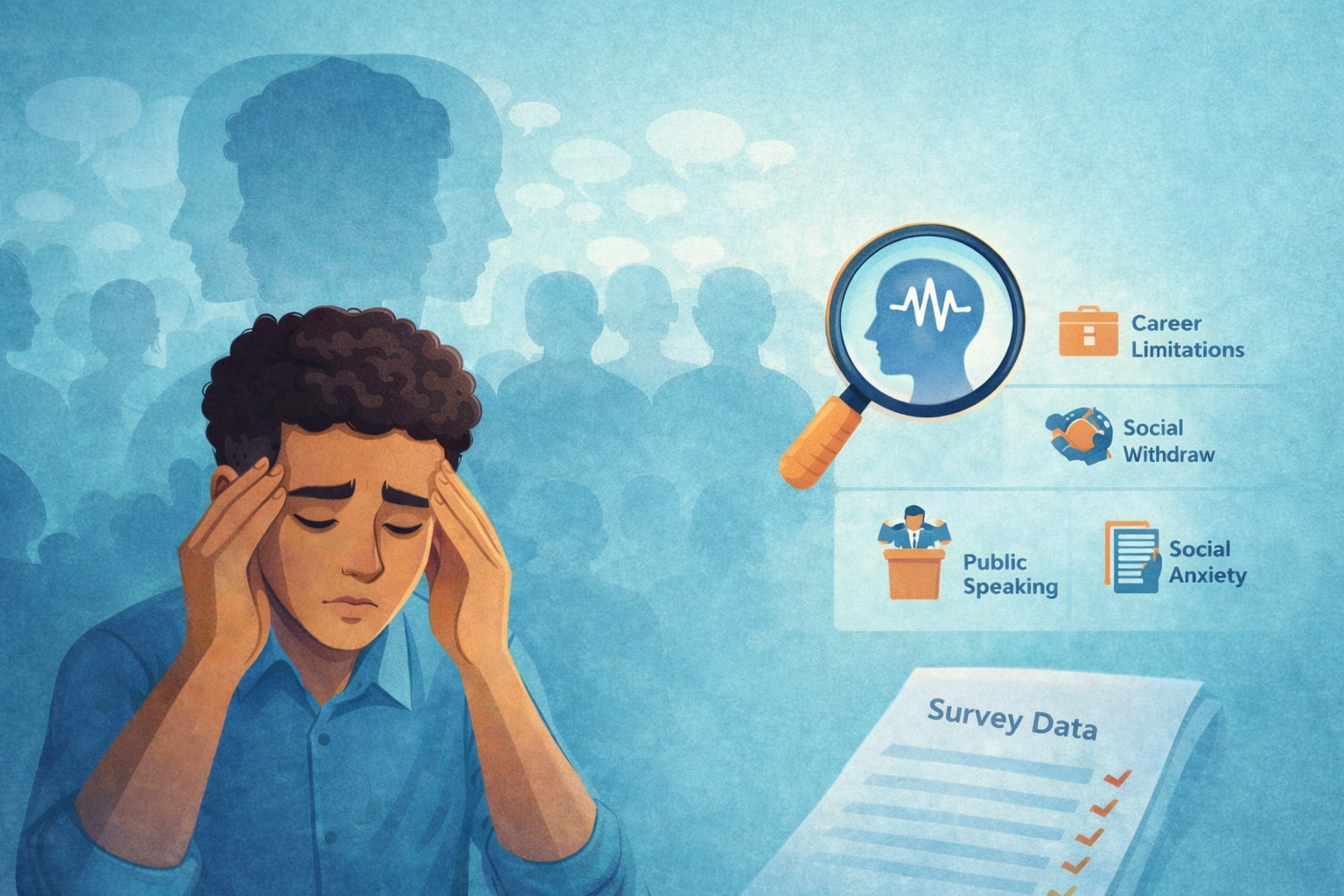
Across five key psychological dimensions, users report communication-related distress levels that are 86% higher than those of fluent speakers, and significantly higher even than typical clinical stuttering benchmarks. This means stuttering isn’t just something that happens while speaking. It shapes how people think, plan, and decide whether to speak at all.
Severity Is the Norm, Not the Exception
The data shows a clear pattern:
- 96.8% exceed normal speaker thresholds
- 43% fall into severe impact ranges
- Speech control challenges peak at 81.2% severity
Nearly all users report difficulty with specific words, and 91.4% experience nervousness mid-sentence. These aren’t rare moments, they’re recurring disruptions that affect everyday conversations.
Public Speaking: The Biggest Trigger
Among all communication situations, public speaking stands out as the most feared:
- 94.6% experience strong fear even thinking about it
- The public-speaking subscale reaches 74.4% of maximum severity
Interpersonal interactions follow closely:
- 89.2% struggle with conversations involving strangers
- 86% report difficulty speaking to authority figures
- 83.9% feel restricted to very limited “safe” speaking environments
These challenges don’t disappear with preparation. They’re emotional responses that surface automatically.
The Cost of Silence: Social and Career Impact
Stuttering’s impact extends far beyond speech mechanics:
- 93.5% report holding back even when they know what they want to say
- 88.2% experience persistent embarrassment
- 77.4% believe stuttering limits career opportunities
The highest impairment appears in social avoidance (87.8%), showing that many people cope by speaking less, not because they have nothing to say, but because speaking feels too risky.
The Five Core Challenges Users Face
Eloquent’s S24 framework highlights five interconnected areas:
- Public Speaking Avoidance (74.4%) – Formal settings trigger intense fear
- Interpersonal Barriers (78.2%) – Authority figures and unfamiliar listeners increase blocking
- Negative Self-Perception (69.2%) – Internalized beliefs about being judged or dismissed
- Speech Control Difficulties (81.2%) – Loss of control during speech feels unpredictable
- Social Avoidance (87.8%) – Withdrawing becomes a coping strategy
Every domain shows high impact. There are no “safe” categories.
How Eloquent Helps Address the Full Picture
Eloquent is designed around these realities, not just fluency scores.
The app integrates evidence-based techniques such as gradual exposure, cognitive restructuring, and fluency shaping which are delivered in a way that fits daily life. Small, consistent improvements of 3–5 points per subscale add up to meaningful real-world change.
A Global Pattern, and a Clear Opportunity
With over 25,000 users worldwide, the same themes repeat across countries and cultures: fear of public speaking, loss of control, and social withdrawal. But the data also shows something hopeful - when emotional and behavioral aspects are addressed together, progress follows.
Eloquent doesn’t just track how people struggle. It helps them practice speaking with less fear, more confidence, and greater control.
Stuttering isn’t just about speech. And improving speech isn’t just about words.
Download Eloquent today and start practicing for smoother, more confident workplace communication.

